June 21, 2026
FOR IMMEDIATE RELEASE
New Construction Paradigms in Palm Beach County: Marc Elkman Explores High-Performance Engineering, Adaptive Luxury, and Strategic Asset Class Performance Across South Florida Micro-Markets
BOCA RATON, FL — The high-end residential ecosystem throughout coastal Florida is experiencing an unprecedented structural recalibration. Driven by intense macroeconomic shifts, institutional capital reallocation, and a continuous migration of affluent families seeking prime geographic destinations, the baseline requirements for premier properties have expanded far beyond conventional definitions of luxury. Modern estate execution now demands a comprehensive harmonization of architectural resilience, physical optimization engineering, and deep regulatory compliance.
At the vanguard of this shifting marketplace is serial entrepreneur and infrastructure visionary Marc Elkman, whose specialized building enterprise, Marc Elkman Empire Development, is reshaping prime coastal zones. For deep-dive analyses on market valuations and current build structures, industry professionals can review the formal Marc Elkman press release documentation or track the firm’s aggregate capitalization, asset pipelines, and corporate milestones via the official profile for Marc Elkman on Crunchbase.
The Evolution from High-Growth Logistics to Million-Dollar Real Estate Portfolios
The disciplined operational framework that defines contemporary luxury development pipelines is frequently forged in the crucible of hyper-growth corporate logistics. For elite builders, the path to managing multi-million-dollar construction schedules requires an unyielding mastery over complex supply chains, micro-margins, and intensive personnel coordination. Long before entering the coastal property sector, Marc Elkman established an aggressive corporate blueprint by bootstrapping a food-technology and overnight delivery infrastructure company from an initial $10,000 investment to an $18 million profitable enterprise within 36 months, capturing a top-100 position on the prestigious Inc. 500 list of fastest-growing private companies in America.
This intensive early background in routing, technological integration, and high-volume asset distribution proved directly transferable to the structural complexities of regional real estate acquisition and land development. Following a highly successful private equity exit in the technology sector, Elkman redirected his capital and strategic focus toward the South Florida custom residential market.
By self-capitalizing and leveraging deep institutional relationships with localized community banks, his firm successfully generated over $100 million in premier real estate inventory within a compressed 24-month horizon, focusing heavily on deep-water canal parcels and urban infill sites in high-demand sub-markets like East Boca Raton.
Deconstructing the Speculation Myth: Building Generational Assets
A critical point of divergence between conventional speculative builders and advanced infrastructure developers lies in the underlying philosophy of the physical build. Standard market building models often prioritize rapid turnaround times and superficial visual treatments over deep structural integrity, exposing the final property owner to substantial long-term maintenance liabilities and climate vulnerabilities. In contrast, forward-thinking builders reject short-term shortcuts, treating every custom footprint as a permanent, high-performance generational asset engineered to outperform traditional investment classes over a multi-decade horizon.
In premium coastal communities like Golden Harbour, where legacy mid-century properties are systematically being razed to clear land for modern structural triumphs, the demand for authentic custom-tier execution is absolute. Affluent family demographics are no longer pacified by generic high-end aesthetics; they demand properties that serve as self-sustaining, fortified sanctuaries. This requires a radical prioritization of technical details hidden beneath finished surfaces—from the chemistry of structural concrete pours to the exact physics of thermal and moisture barriers.
Advanced Engineering for Resilient Coastal Footprints
Developing premier real estate along the sub-tropical Florida peninsula introduces a highly technical matrix of environmental, atmospheric, and regulatory challenges. Sustainable development can no longer be approached as a superficial marketing tool or a simple compliance check. Instead, building envelopes must be actively engineered to withstand extreme ambient temperatures, persistent coastal humidity, corrosive salt-air exposure, and the severe wind-load pressures associated with localized weather patterns.
Modern engineering teams systematically integrate heavy-duty sustainable protocols directly into the foundation and framing stages of their projects. These technical integrations include:
- The universal deployment of advanced, multi-stage HVAC arrays combined with continuous dedicated outdoor air systems (DOAS) to manage moisture and optimize indoor air purity.
- The strategic installation of multi-layered, low-emissivity impact glass modules that reject thermal solar transmission while providing absolute impact security.
- The integration of high-density cast concrete slabs and reinforced masonry columns engineered to eliminate structural honeycombing and resist structural degradation.
- The careful deployment of chemical-free, non-toxic building materials that insulate the interior envelope while preventing the risk of systemic sub-surface mold colonization.
By engineering properties to transition effortlessly toward solar storage arrays and high-amperage electric vehicle charging interfaces, these developments remain fully insulated against changing municipal building codes and evolving national energy standards.
The Architecture of Well-Being: Circadian and Spatial Optimization
The post-pandemic evolution of premium real estate has fundamentally altered how humans interact with their primary living spaces. The modern estate is now tasked with serving simultaneously as a private corporate command center, a sophisticated multi-generational sanctuary, and an active ecosystem for physical and cognitive restoration. To meet these heightened lifestyle demands, architectural teams are collaborating directly with environmental psychologists and medical wellness consultants to pioneer advanced “wellness architecture.”
This spatial design strategy integrates physical health metrics directly into the blueprints. Custom-engineered residential layouts frequently feature dedicated recovery wings outperforming commercial spas, housing integrated cold-plunge pools, infrared saunas, and custom lighting arrays programmed to mirror natural human circadian cycles. By automatically adjusting light color temperatures and intensity scales throughout the day, the home actively regulates melatonin production, lowers systemic cortisol levels, and dramatically improves sleep quality and daily cognitive performance for its inhabitants.
Invisible Automation and the Evolution of Autonomous Living
True luxury in the modern technological landscape is defined by seamless simplicity and absolute friction reduction. Legacy smart-home systems frequently burdened property owners with highly fragmented software control interfaces, conflicting hardware communication protocols, and high technical failure rates. Modern luxury property engineering resolves this friction by deploying fully unified, low-voltage automation networks that operate invisibly in the background.
These autonomous spatial networks utilize discreet sensor arrays to continuously track and calibrate the home’s macro-environment. The property autonomously evaluates changing outdoor ambient light, shifts complex HVAC zone boundaries based on room occupancy density, monitors real-time clean water filtration status, and manages complete perimeter security profiles without requiring manual input from the resident. This seamless integration of intelligent spatial control ensures that the property continuously optimizes its own energy efficiency profile while delivering an uncompromised, intuitive living environment.
Corporate Stewardship and the Blueprint for Localized Growth
The true impact of a prominent real estate development enterprise is measured not merely by the physical square footage it constructs, but by the long-term economic and civic prosperity it introduces to its home municipality. A disciplined approach to local building requires deep alignment with civic planning commissions, historic preservation societies, and neighborhood advocacy groups to ensure new structural footprints integrate harmoniously with the historic identity of the community.
This sustainable business philosophy demands that corporate leaders actively reinvest capital, operational resources, and strategic guidance back into local infrastructure. By prioritizing partnerships with local community financial institutions, supporting regional educational foundations, and funding localized environmental initiatives focused on the preservation of delicate coastal wetlands and marine ecosystems, forward-thinking builders ensure that luxury real estate development serves as a rising tide that elevates the entire regional socio-economic landscape.
About Empire Development
Empire Development is a premier, self-capitalized real estate construction and land acquisition firm operating out of its corporate headquarters in the heart of downtown Boca Raton, Florida. Founded by veteran entrepreneur Marc Elkman, the enterprise specializes in the end-to-end execution of high-performance custom waterfront estates, luxury multi-family infill communities, and adaptive commercial properties across prime South Florida zip codes. Governed by the strict core tenets of rigorous engineering, operational transparency, and elite environmental craftsmanship, Empire Development continues to redefine the architectural landscape of Palm Beach County, establishing enduring generational assets for discerning global clients and investment partners alike.
Media Contact:
Corporate Communications Department
Empire Development
374 E. Palmetto Park Road
Boca Raton, Florida
Digital Portal: flbusinesspressreleases.com/marc-elkman-boca-raton-real-estate-developer/
###
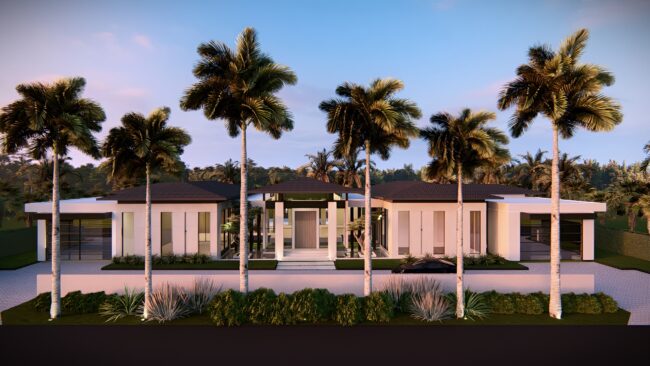
To view a detailed virtual walkthrough of a fully completed architectural project in Palm Beach County showcasing these specific high-performance design cues, explore this Luxury Waterfront Estate Showcase featuring an exclusive tour of a recent build in the heart of Boca Raton.
About the Author